 |
| Flowers currently blooming in my garden |

Thursday, February 24, 2011

Tuesday, February 15, 2011
I have a new camera (Sony cyber-shot DCS-HX1)
After envying the photography of other garden bloggers - especially of birds and animals - and studying other blogs on the subject of camera selection for garden photography, I decided the best thing for me would be a so-called superzoom "bridge" camera, i.e. a camera in between a DSLR (digital single lens reflex camera) and a point-and-shoot compact digital camera.
I've been very happy with my Sony Cyber-shot DSC-W120, a digital compact point-and-shoot camera with 7.2 megapixels and 4x optical zoom. This camera has served me well and I recommend it highly. It's easy to use, small and light, and takes wonderful landscape photos, for example for vacation photography. Up till now, all my blog photos were taken with this camera.
What it doesn't offer is a large zoom. Since I've been so happy with Sony up till now, I had a slight preference for also purchasing a Sony bridge camera. After reading lots of reviews, it didn't seem to me that there were significant differences in quality or price between Sony and its main competitors (Panasonic, Canon, Olympus) in this category of camera, so I went for the Sony Cyber-shot DSC-HX1 digital camera with 9.1 megapixels and 20x optical zoom.
Compared to my little compact Cyber-shot, this is a large, heavy camera, even though many reviewers praise how light it is in comparison to others. When the zoom lens is extended to full length, it's somewhat unwieldy to hold, so I took the advice of many websites and purchased a tripod as well (a Cullmann Alpha 2500 lightweight tripod).
So far it's paid off that I got another Sony, since the handling is very similar to my small compact camera and I could start right in. Something some people object to about Sony digital cameras is that they require proprietary memory cards and batteries. The included memory card is so small that you pretty much have to buy a large one right away (I purchased one with 4gb). This didn't bother me, since I figure it's a one-time investment, and my experience with the Sony accessories for my other camera have been good.
This camera is chock-full of features and options! Up till now, I've mostly experimented with zoom photos of birds, and macro photos of plants. I set up the tripod, hid behind a bush and trained the fully zoomed out lens onto the bird-feeding area in my garden. Here's the kind of results I've gotten so far. The first taken with tripod, the others without. You can see the difference, I think.
I'm going to have to keep working on this. Above all, I need a good place to sit and wait, at least partially out of sight, allowing me to get a little closer to the birds.
The other thing I've tried so far are close-ups, i.e. macro photos. However, I don't think the new camera is a significant improvement over my small camera.
As an example, here's a photo of a **slug** - yes, slug in February, chewing away at the sorrel. Apparently, these creatures are active at 10 degrees C (50 degrees F). Looks like I'm going to have to cross sorrel off my list.
So far, I've mostly used the "intelligent automatic" setting on my camera. But I'm looking forward to learning how to use all the manual options as well. Still, even then I doubt I'll ever achieve the kind of fantastic bird photography to be found, for example, on Sisah's, Diana's, and Carol's blogs, among others.
I've been very happy with my Sony Cyber-shot DSC-W120, a digital compact point-and-shoot camera with 7.2 megapixels and 4x optical zoom. This camera has served me well and I recommend it highly. It's easy to use, small and light, and takes wonderful landscape photos, for example for vacation photography. Up till now, all my blog photos were taken with this camera.
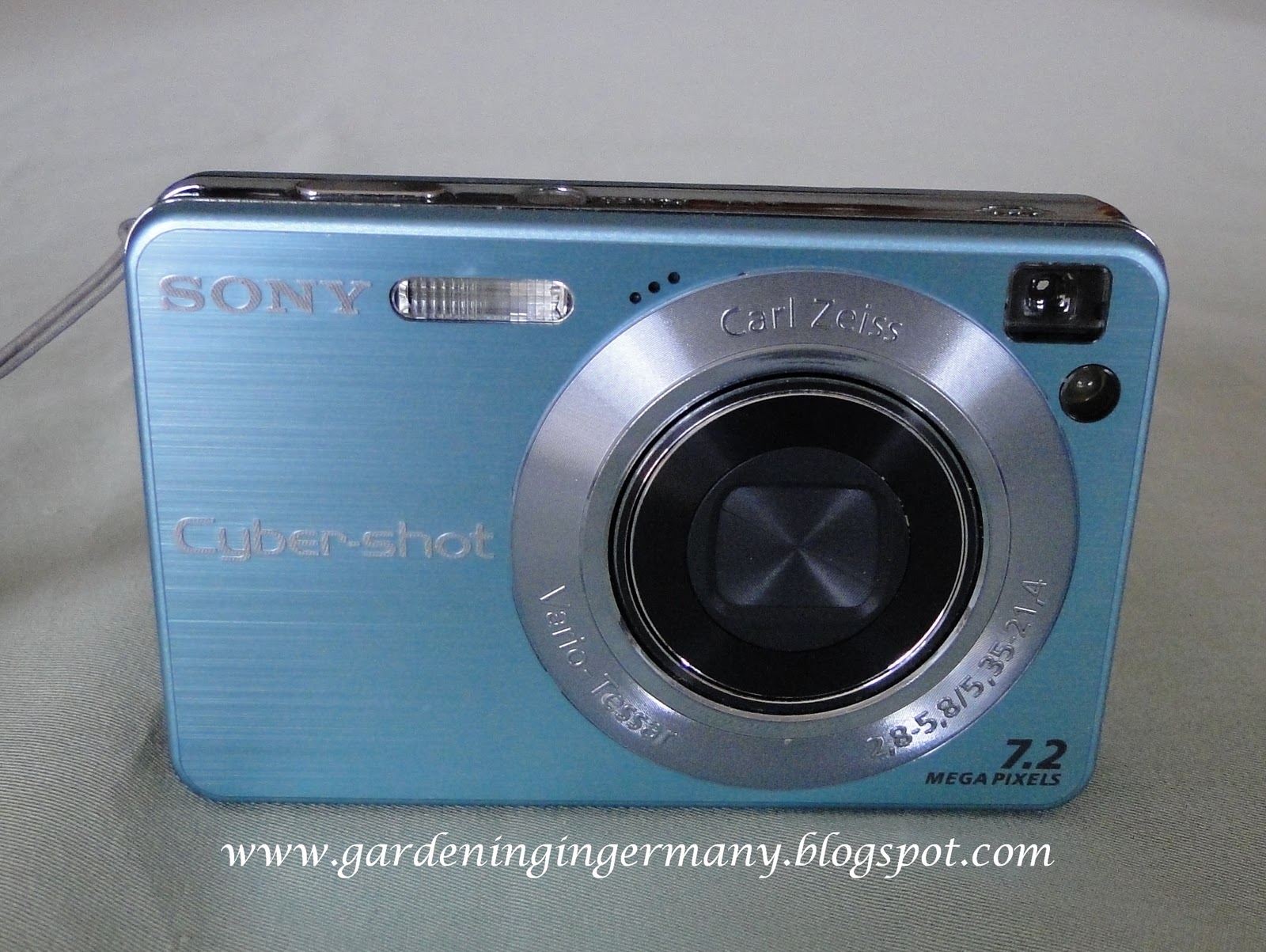 |
| Old camera: Sony Cyber-shot DSC-W120 |
What it doesn't offer is a large zoom. Since I've been so happy with Sony up till now, I had a slight preference for also purchasing a Sony bridge camera. After reading lots of reviews, it didn't seem to me that there were significant differences in quality or price between Sony and its main competitors (Panasonic, Canon, Olympus) in this category of camera, so I went for the Sony Cyber-shot DSC-HX1 digital camera with 9.1 megapixels and 20x optical zoom.
 |
| New camera: Sony Cyber-shot DSC-HX1 |
Compared to my little compact Cyber-shot, this is a large, heavy camera, even though many reviewers praise how light it is in comparison to others. When the zoom lens is extended to full length, it's somewhat unwieldy to hold, so I took the advice of many websites and purchased a tripod as well (a Cullmann Alpha 2500 lightweight tripod).
So far it's paid off that I got another Sony, since the handling is very similar to my small compact camera and I could start right in. Something some people object to about Sony digital cameras is that they require proprietary memory cards and batteries. The included memory card is so small that you pretty much have to buy a large one right away (I purchased one with 4gb). This didn't bother me, since I figure it's a one-time investment, and my experience with the Sony accessories for my other camera have been good.
This camera is chock-full of features and options! Up till now, I've mostly experimented with zoom photos of birds, and macro photos of plants. I set up the tripod, hid behind a bush and trained the fully zoomed out lens onto the bird-feeding area in my garden. Here's the kind of results I've gotten so far. The first taken with tripod, the others without. You can see the difference, I think.
 |
| Great tit (Parus major) - Kohlmeise |
 |
| Long-tailed tit (Aegithalos caudatus) - Schwanzmeise (I think) |
 |
| European robin (Erithacus rubecula) - Rotkehlchen |
 |
| Great tit and long-tailed tits |
The other thing I've tried so far are close-ups, i.e. macro photos. However, I don't think the new camera is a significant improvement over my small camera.
As an example, here's a photo of a **slug** - yes, slug in February, chewing away at the sorrel. Apparently, these creatures are active at 10 degrees C (50 degrees F). Looks like I'm going to have to cross sorrel off my list.
 | ||
| slug on sorrel |
Saturday, February 5, 2011
Early propagation of tomatoes
Finally it's February, and according to most garden calendars I can now start propagating tomatoes from seeds. Last year I didn't start until March, and that was a little late for our warm area here in the Rhine-Neckar delta of Southern Germany. By starting early, I'll have very sturdy plants by April, when they'll go into large pots along the warm south wall of my allotment cottage.
This year I decided to purchase windowsill propagation sets from the garden center, rather than just planting seeds in a hodgepodge of yogurt cups and fruit trays on the windowsill. It's not really a luxury, since they are incredibly cheap. Here are the two I bought, including biodegradable cells, propagating soil mix, covers, and even some seeds (radishes, dill and sunflowers). I decided not to go for electric heating, since we have some very warm windowsills.

A friend who has been growing tomatoes for years gave me some seeds year before last. For over twenty years she has removed the seeds from the choicest fruits of her best plants and saved them for the subsequent year. Following her example, I harvested seeds from my three favorites of the plants I grew from her seeds. The seeds along with their gelatinous surrounding substance are placed on aluminum foil, allowed to dry (making them stick on), labeled, folded to keep out the light, and stored. I don't know the correct names of the original varieties, and after so many years of selection and propagation, the plants may not even conform to them anymore.

We call them "paprika", "peach", and "oxheart" tomatoes. The peach tomatoes are large and yellow (even their seeds, in the lower left-hand corner of the foil above, look yellow), the oxhearts are huge and meaty, and the paprika tomatoes are long, pointed and firm-fleshed. From last year's harvest:
So I'll be propagating these three again. However, later in the summer most of my oxheart tomatoes developed some kind of blight, as did my neighbors' tomatoes as well. Since I have my tomatoes in pots under an overhanging roof, meaning they don't get rained on and have no contact with garden earth, I was less affected than others, but some of my tomatoes still looked like this:

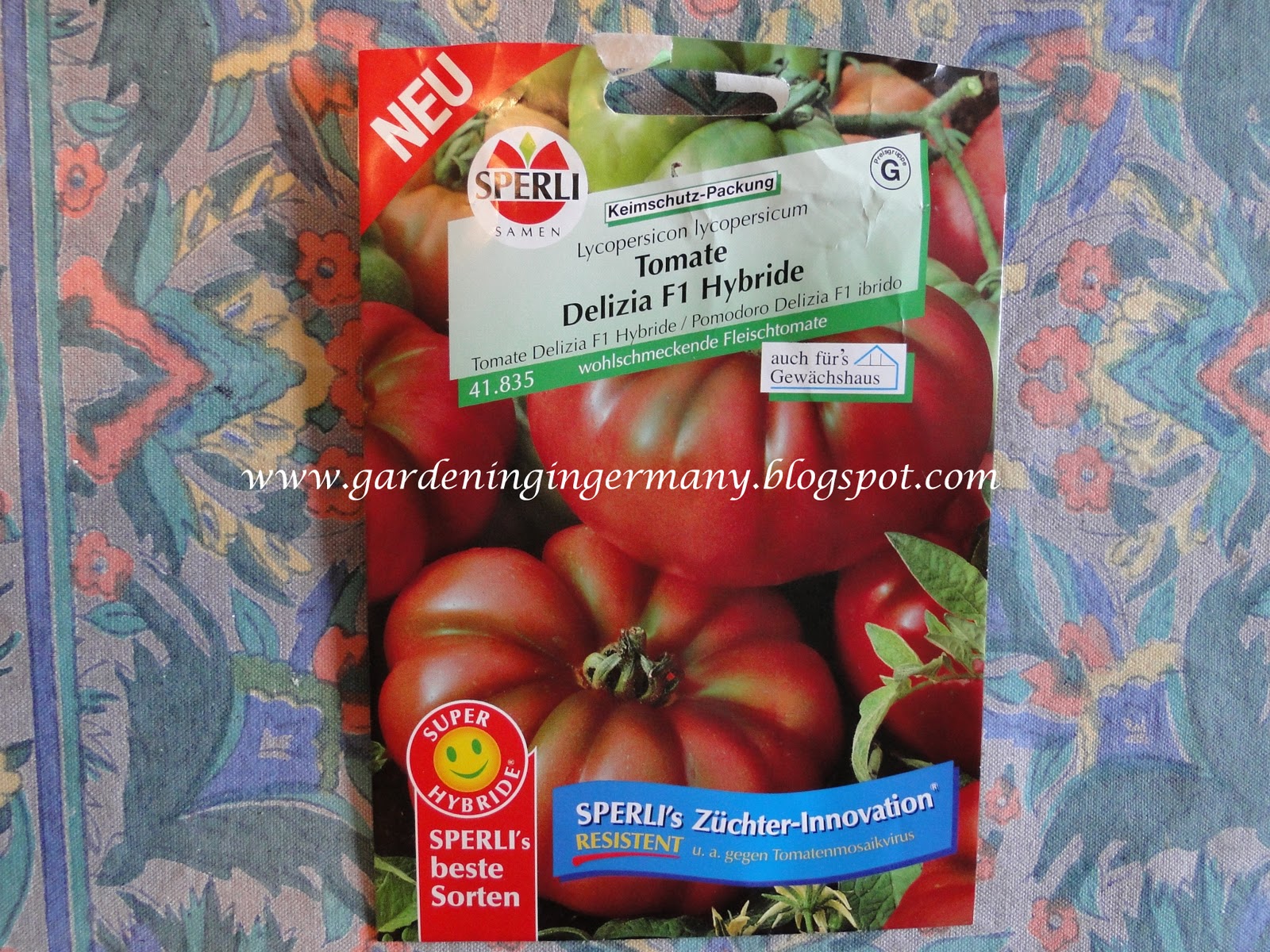
For this reason I want to try some allegedly resistant hybrids this year, in addition to our own "heritage" tomatoes. This hybrid, Delizia F1, claims to be resistant to tomato tobacco mosaic virus (TMC) and to fusarium wilt, two widespread tomato diseases.

I've also ordered bush tomato seeds (Balkonstar, Lycopersicon esculentum) from Dreschflegel, a cooperative of 14 farms that produces and markets organic seeds. Many thanks to Sisah's blog for introducing me to this link, even though I ended up ordering more than I'll probably be able to plant (besides the tomato also paprika, pumpkin, zucchini, and lentil seeds, something I've always wanted to try).
Does anyone have any experience with disease resistant hybrid tomatoes?
This year I decided to purchase windowsill propagation sets from the garden center, rather than just planting seeds in a hodgepodge of yogurt cups and fruit trays on the windowsill. It's not really a luxury, since they are incredibly cheap. Here are the two I bought, including biodegradable cells, propagating soil mix, covers, and even some seeds (radishes, dill and sunflowers). I decided not to go for electric heating, since we have some very warm windowsills.

A friend who has been growing tomatoes for years gave me some seeds year before last. For over twenty years she has removed the seeds from the choicest fruits of her best plants and saved them for the subsequent year. Following her example, I harvested seeds from my three favorites of the plants I grew from her seeds. The seeds along with their gelatinous surrounding substance are placed on aluminum foil, allowed to dry (making them stick on), labeled, folded to keep out the light, and stored. I don't know the correct names of the original varieties, and after so many years of selection and propagation, the plants may not even conform to them anymore.

We call them "paprika", "peach", and "oxheart" tomatoes. The peach tomatoes are large and yellow (even their seeds, in the lower left-hand corner of the foil above, look yellow), the oxhearts are huge and meaty, and the paprika tomatoes are long, pointed and firm-fleshed. From last year's harvest:
 |
| peach and oxheart tomatoes from last year's harvest |
 |
| sliced peach tomato - delicious! |
 | |
| paprika tomato |

For this reason I want to try some allegedly resistant hybrids this year, in addition to our own "heritage" tomatoes. This hybrid, Delizia F1, claims to be resistant to tomato tobacco mosaic virus (TMC) and to fusarium wilt, two widespread tomato diseases.
I've also ordered bush tomato seeds (Balkonstar, Lycopersicon esculentum) from Dreschflegel, a cooperative of 14 farms that produces and markets organic seeds. Many thanks to Sisah's blog for introducing me to this link, even though I ended up ordering more than I'll probably be able to plant (besides the tomato also paprika, pumpkin, zucchini, and lentil seeds, something I've always wanted to try).
Does anyone have any experience with disease resistant hybrid tomatoes?
Subscribe to:
Posts (Atom)